
How the Hamilton to New Baltimore Groundwater Consortium uses WaterSuite to map legacy risks, analyze river-aquifer interactions, and select secure pumping locations.

The Challenge
The Great Miami Buried Valley Aquifer is one of the most productive groundwater sources in the Midwest, with municipal wells drawing up to 4,000 gallons per minute. When evaluating future wellfield sites, utilities encounter complex hydrogeological boundaries and limited local zoning control. Historically, vetting new pumping locations required spending weeks manually gathering and cross-referencing fragmented datasets from separate municipal, state, and federal registries to characterize localized groundwater vulnerability.
The WaterSuite Solution
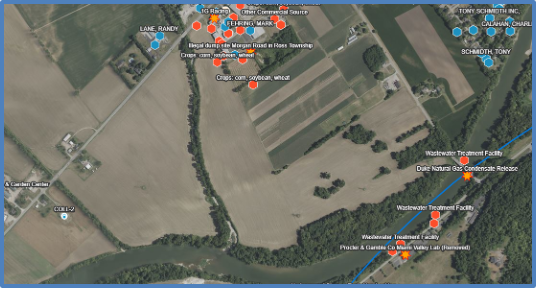
The Consortium adopted WaterSuite as a centralized decision-support platform to rapidly isolate real-world threats and vet prospective well locations. Planners overlay calculated Time-of-Travel zones against active contaminant source databases, infrastructure layers, environmental assets, monitoring wells, and water quality sampling records. Potential hazards—such as underground storage tanks, landfills, active wastewater outfalls, dense septic system areas, historical industrial zones, and biosolids application sites—are evaluated instantaneously within the context of surface water influences and land-use dynamics.
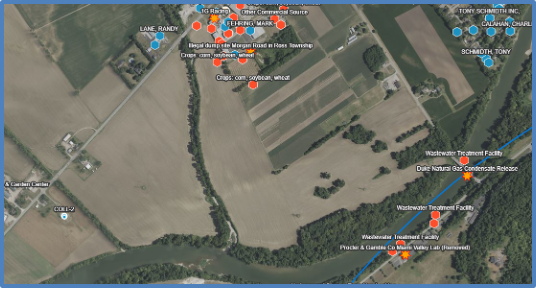
WaterSuite map visualizing potential groundwater quality threats near a prospective wellfield site.
THE Outcome & business Impact
Accelerated Site Evaluation: Reduced research and site vetting timelines from weeks to hours by consolidating disparate federal, state, and local datasets into a single GIS platform.
Enhanced Technical Precision: Delivered science-backed risk profiles that provided greater confidence in selecting and protecting future wellfields.
Streamlined Regulatory Collaboration: Improved communication and enhanced collaboration with regulatory agencies and engineering consultants.
Defensible Capital Investment: Ensured multi-million dollar wellfield infrastructure decisions were fully documented and resilient against long-term environmental threats.

